
Something big happens in AI every other week. Models are getting smarter, more reliable, measurably more accurate. So why isn't adoption compounding at the same rate? Because adoption doesn't follow statistics — it follows stories.
This is part of the Hidden Variables in AI Strategy series — examining the factors that determine whether AI initiatives deliver real organisational value or remain stuck in perpetual pilot.
From the Field: When Data Wasn't Enough
A First-Hand Account
I used AI to generate travel content at scale — across thousands of destinations. Blind tests showed AI outperforming human-written content on accuracy and structure. The data was clear. Then one inaccuracy surfaced. A tweet went viral. Suddenly the conversation was not about AI outperforming humans on accuracy — it was about "AI misleading users."
Here is the twist: the text that triggered the backlash? It was human-curated, not AI-generated. But perception doesn't check metadata. It reacts to moments.
The quantitative case for the AI system remained strong throughout. But the perception case collapsed with a single viral moment. And it is perception — not performance data — that drives the next deployment decision, the next budget approval, the next stakeholder sign-off.
This Is Not a New Pattern
Every technology that entered high-stakes domains faced the same gap between statistical performance and public trust:
- Aviation: Airplanes were technically safe before people felt safe flying. The statistical record improved gradually. Trust lagged — shaped more by memorable crashes than by the far more numerous successful flights.
- Nuclear energy: Statistically one of the safest sources of electricity by deaths-per-terawatt-hour. Yet socially resisted in most markets — shaped decisively by Chernobyl and Fukushima, events that represent a tiny fraction of nuclear operations globally.
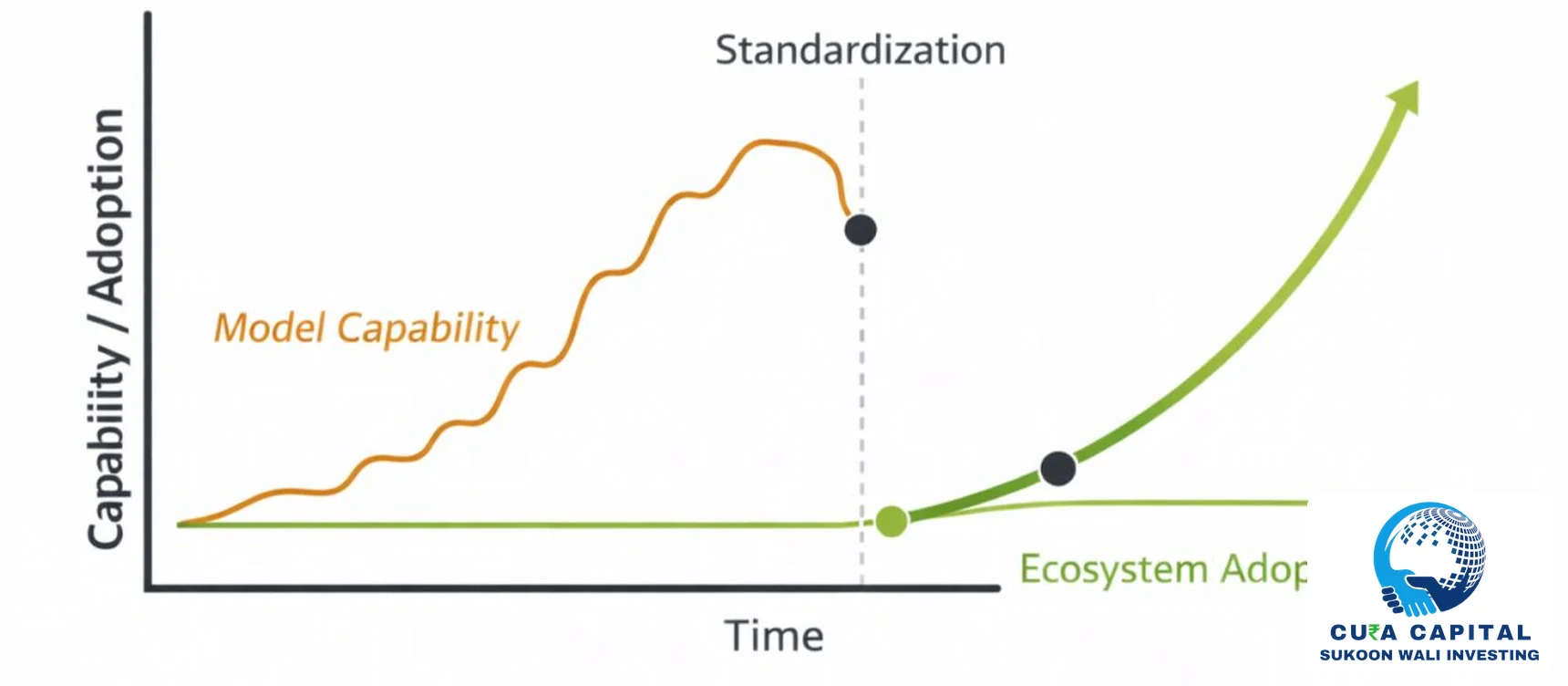
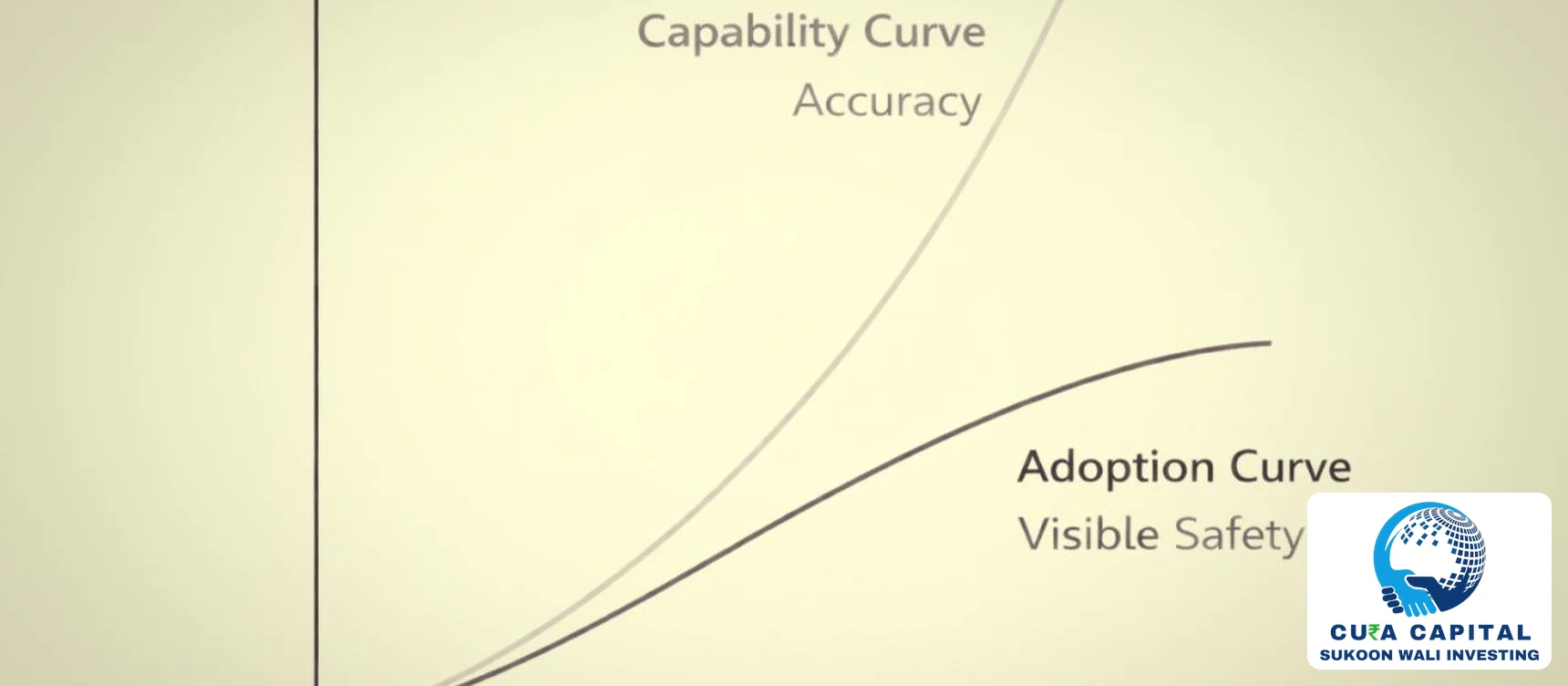
In both cases, the pattern is the same: performance improves quietly. Failure travels instantly. And adoption follows the trust curve, not the accuracy curve.
Accuracy builds capability. Visible safety builds adoption. They are not the same curve.
Two Curves, Two Speeds
AI builders tend to focus on the accuracy curve: improving model performance, reducing hallucinations, expanding context windows. These are real and important improvements. But they address capability, not trust.
The visible safety curve moves differently. It is shaped by:
- Memorable failures — which travel farther and faster than accumulated successes
- Narrative control — who defines what "AI" means to non-technical stakeholders
- Human-in-the-loop design — whether the system communicates uncertainty or projects false confidence
- Response to failure — how organisations behave when something goes wrong, which shapes long-term trust more than the failure itself
In the age of AI, virality moves faster than validation. One incident — regardless of whether it is representative of actual system performance — can reset stakeholder confidence across an entire organisation or sector.
What This Means for AI Builders
If you are building AI into products or processes today, ask yourself:
- Will your best metrics define you? Probably not. Metrics are for internal review. Stories are for external perception.
- Or will your worst moment? Almost certainly — if it happens publicly and you are not prepared for it.
This does not mean avoiding AI deployment. It means investing in visible safety as deliberately as you invest in accuracy. Communicate uncertainty. Design for human oversight. Plan the failure narrative before failure happens. Build trust as an explicit product deliverable, not an afterthought.
Capability creates leverage. Perception determines adoption. And in the high-stakes world of enterprise AI, one visible failure can outweigh thousands of invisible successes.
Disclaimer: The views expressed are those of the author and are for informational purposes only. They do not constitute financial, legal, or investment advice.